Building modern applications is not just about writing code anymore. It’s about understanding how different technologies work together to create a smooth user experience from screen to server. Many beginners start learning bits and pieces without seeing the full picture. When someone begins exploring Full Stack Developer Course in Trichy, they often realize that full-stack development is less about mastering one tool and more about learning how systems connect, communicate, and scale in real projects.
Frontend tools that shape user experience
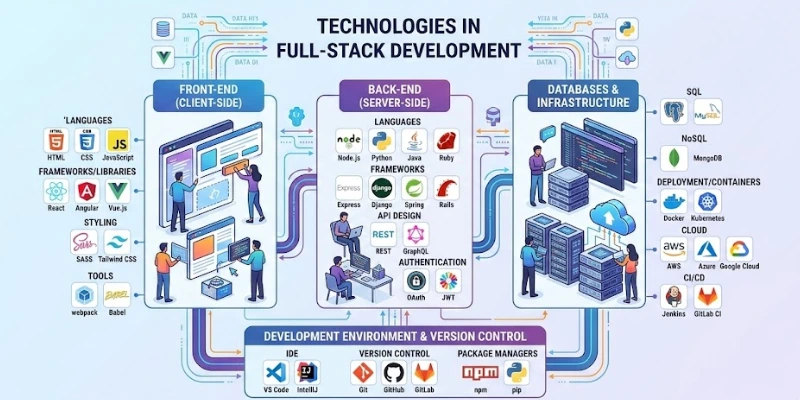
The frontend is what users see and interact with. Technologies like HTML, CSS, and JavaScript form the base, but frameworks like React, Angular, and Vue help build smoother and faster interfaces. These tools manage layouts, buttons, forms, and animations. They also control how data appears on the screen. For beginners, frontend work teaches structure, logic, and user thinking. It’s not just design, it’s understanding how people interact with software in daily life.
Backend systems that power applications
The backend handles logic, data processing, and communication between systems. Languages like Java, Python, Node.js, and PHP are commonly used. Frameworks such as Spring Boot, Django, and Express help structure backend development. This layer manages authentication, data flow, and system rules. Learning backend tech shows how real systems make decisions. Many learners connecting backend skills with Python Course in Trichy start seeing how enterprise-level applications are actually built and maintained.
Databases and data management
Every application needs data storage. Databases like MySQL, PostgreSQL, MongoDB, and Firebase store user data, logs, and system records. Full-stack developers must understand how data is structured, stored, and retrieved. SQL databases focus on structured data, while NoSQL handles flexible data models. This knowledge helps in building stable systems. Understanding data flow also helps developers avoid performance issues and data loss problems in real projects.
APIs and system communication
APIs allow different parts of a system to talk to each other. REST and GraphQL are common API styles used in full-stack development. APIs connect frontend to backend, backend to databases, and even systems to external services like payment gateways or email tools. Learning API concepts helps beginners understand how apps integrate with other platforms. This is where full-stack thinking really develops, because systems no longer work alone.
Version control and collaboration tools
Real development is team-based. Tools like Git and platforms like GitHub or GitLab help developers track changes and work together. Version control prevents code loss and manages teamwork. Beginners often underestimate this part, but collaboration tools are core technologies in full-stack roles. They teach discipline, structure, and teamwork. Understanding how teams manage code is as important as writing the code itself.
Deployment and cloud platforms
Applications must be hosted somewhere. Cloud platforms like AWS, Azure, and Google Cloud host websites, databases, and services. Tools like Docker help package applications so they run consistently across systems. Deployment knowledge helps developers understand real production environments. This is where learning turns into real-world application building. Many learners exploring Full Stack Developer Course in Erode see how deployment skills improve job readiness and confidence.
Testing and maintenance tools
Testing tools ensure applications work properly after updates. Automated testing frameworks and monitoring tools help teams maintain system health. Full-stack developers need basic testing knowledge to avoid breaking features. Maintenance tools track performance, errors, and uptime. This builds long-term thinking. Applications are not just built once; they are maintained, updated, and improved constantly.
Full-stack development is not about mastering one language or tool. It’s about understanding how frontend, backend, databases, APIs, cloud systems, and teams connect into one working system. When beginners learn this structure, their thinking changes from writing code to building systems. This mindset builds long-term career growth and technical confidence. People who grow with this approach are better prepared for evolving tech roles and future learning paths, especially when skills are built alongside structured learning journeys like Python Course in Erode for long-term stability.
Also Check: Skills Needed To Begin A Career In Full Stack Development