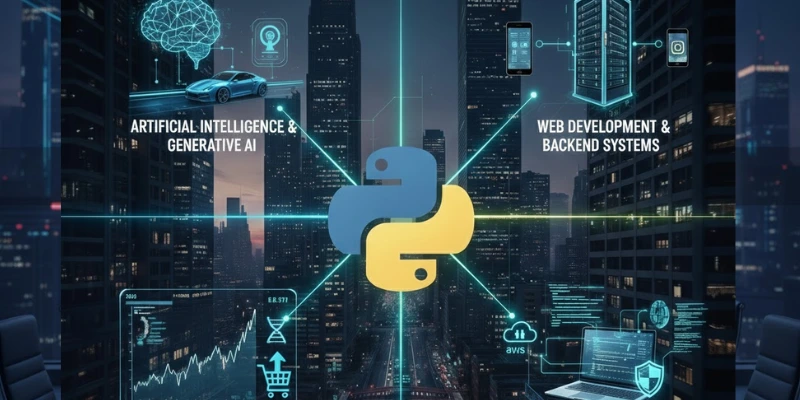
People usually start learning Python with simple programs, but the real curiosity begins when they see it working in everyday systems. From apps to business tools, Python quietly runs behind the scenes in many places we don’t even notice. Students and career switchers often wonder how a single language fits into so many industries. That’s why people exploring Python Course in Trichy often ask one simple question: where does Python actually get used in real life, beyond tutorials and practice projects?
Python in web applications
Python is widely used to build websites and web platforms. Many backend systems use it to manage user data, handle logins, process payments, and control workflows. Frameworks make it easier to create secure and scalable applications without heavy complexity. Developers like Python because it’s readable and easy to maintain, even in large projects. In real companies, Python often runs the logic layer that users never see but always depend on.
Python in data analysis and business decisions
Businesses use Python to understand data, not just store it. It helps analyze customer behavior, sales patterns, and operational performance. Python scripts clean data, organize it, and turn it into meaningful reports. This is where Python becomes a decision-making tool, not just a programming language. Teams rely on these insights to plan strategies and improve services. Python turns raw numbers into clear business direction.
Python in automation and daily workflows
Many repetitive office tasks are automated using Python. From generating reports to sending emails and managing files, Python scripts save hours of manual work. This is common in IT teams, finance departments, and operations roles. Learning automation changes how people work, not just how they code. Professionals who understand scripting often become problem-solvers inside teams because they remove routine work and improve efficiency.
Python in regional job markets
Python is not limited to big tech cities. Startups, IT service companies, and small businesses now use Python for automation, analytics, and internal tools. Regional markets are adopting it for practical needs, not trends. Companies looking for Python talent through Python Course in Erode often focus on real skills like scripting, data handling, and system integration rather than just theory.
Python in software testing and quality checks
Python is also used in testing environments. Automated testing tools use Python to check software behavior, performance, and stability. Instead of manual testing every feature, scripts can simulate user actions and system loads. This helps companies release updates faster with fewer errors. Python plays a role in reliability, not just development. It supports teams that focus on stability and user trust.
Python in learning other technologies
Python often acts as a foundation for learning other tech skills. Many developers move from Python into backend development, cloud systems, or data engineering. Learning Python makes it easier to understand system logic, APIs, and databases. This is why people who start with Python often explore other languages too, and many combine it with skills gained through Java Course in Trichy to become more flexible in tech roles.
Python in AI and smart systems
Python is widely used in machine learning and AI projects. From recommendation systems to chatbots and fraud detection, Python supports intelligent applications. Even simple AI tools use Python for data processing and model logic. This makes Python a future-focused skill, not just a current one. People entering tech careers see Python as a long-term investment because it grows with technology trends.
Python’s strength comes from its flexibility. It fits into websites, business systems, automation tools, analytics platforms, and AI projects without needing different languages for each task. That’s why Python careers don’t stay in one role or industry. Professionals who grow with Python often move across domains instead of staying stuck in one job type. Building strong foundations and combining Python with structured learning paths like Python Course in Salem helps people stay adaptable, relevant, and confident as technology keeps changing.
Also Check: Python Features Applications